If you're looking for a way to add privacy to a glass wall, window, bathroom or partition, you've probably come across both switchable smart glass and privacy film. They can achieve a similar basic result — switching glass from clear to private — but the way they're installed, how they look, and their long-term suitability can be quite different.
What Is the Difference?
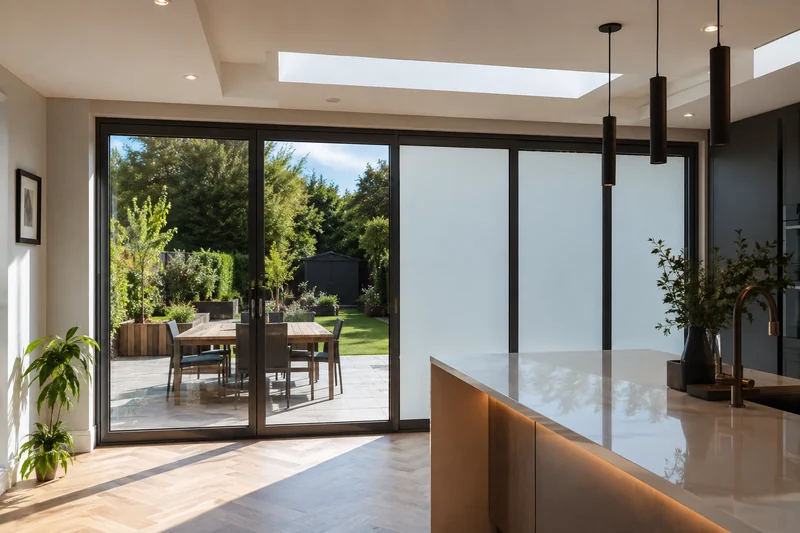
Switchable smart glass has the privacy technology built into the glass itself. At the touch of a switch, the glass changes from clear to a frosted appearance, or to a dark state with Black Switchable, giving you privacy when you need it while retaining all the benefits of glass when you don't. There are no films, no moving parts, nothing applied to the surface — the technology is laminated within the glazing unit itself.
Privacy film — including switchable smart film — is applied to existing glass. This makes it particularly useful where replacing the existing glazing isn't practical. It can be a more straightforward retrofit option and can reduce the initial cost compared with replacing the glass outright.
Both use the same underlying PDLC (Polymer Dispersed Liquid Crystal) technology to achieve the switch between clear and opaque states. The key difference is where that technology sits: inside the glass, or on top of it.
Smart Glass: The Pros and Cons
The advantages
The biggest advantage of smart glass is its clean, integrated finish. Because the technology is incorporated into the glazing, there is no film sitting visibly on the surface. The result looks and feels like premium glass — because it is.
This makes it particularly well suited to high-end residential projects, luxury bathrooms, bedrooms, offices and contemporary interiors where the glass itself is part of the design. It removes the need for curtains or blinds, helping to maintain a clean, uncluttered aesthetic that film can't quite replicate.
Smart glass is also more durable over time. There's nothing applied to the surface that can peel, bubble, or degrade with cleaning. It's genuinely a long-term solution.
The limitations
The main limitation is cost. Smart glass is a premium glazing solution and requires electrical connections to operate, so it needs to be factored into the design and installation from the outset. It's not something you can add retrospectively without replacing the glass.
For new builds and renovations where the glazing is already being specified, this isn't necessarily a barrier — the cost premium over standard glass is often smaller than people expect. But if you have existing glazing you're happy with, film may be the more practical route.
| Factor | Switchable Smart Glass | Privacy Film |
|---|---|---|
| Installation | Replaces existing glazing; electrical connection required | Applied to existing glass; lower disruption |
| Appearance | Clean, seamless, premium finish | Film visible on surface; edges can show |
| Durability | 20+ years; no surface degradation | Film can peel, bubble or scratch over time |
| Cleaning | Standard glass cleaning — no restrictions | Care required to avoid damaging film edges |
| Retrofit? | No — requires glass replacement | Yes — applies to existing glazing |
| Upfront cost | Higher | Lower |
| Long-term cost | Lower — no film replacement | Film may need replacing over time |
Privacy Film: The Pros and Cons
The advantages
Privacy film has one clear advantage: it can be retrofitted to glass that's already in place. If you don't want to remove and replace your current glazing — perhaps because it's structurally integrated, recently installed, or simply expensive to replace — film can be a practical option that delivers switching functionality at lower initial cost.
Switchable smart film is also improving. Applied correctly to large, clean panels, it can look good and perform reliably, particularly in commercial settings where the installation is managed professionally.
The limitations
Because the film sits on the surface of the glass rather than within it, the finished appearance is different from an integrated smart glass unit. On large panels in particular, achieving a truly seamless look is more difficult. Film edges, slight hazing and the visible texture of the applied layer can all be noticeable up close.
Cleaning requires care — abrasive products or aggressive wiping near edges can begin to lift the film. And unlike smart glass, film has a finite lifespan and may need to be replaced, which adds to the long-term cost of ownership.
Which Should You Choose?
For a straightforward retrofit where replacing the glazing isn't practical, privacy film can make good sense. It delivers the core functionality — switchable privacy — at a lower upfront cost and without the disruption of a glass replacement programme.
But if you're specifying glazing from scratch, or if the glass is already being replaced as part of a wider project, switchable smart glass offers a more refined and durable result. The technology feels like part of the architecture rather than something added to it — and over the life of the installation, it will almost certainly cost less to own.
The honest answer is: it depends on whether you're retrofitting or specifying new. For new glass, smart glass wins on every measure except initial cost. For existing glass you'd rather keep, film is worth considering — provided the installation quality is high.
Not sure which is right for your project?
At We Supply Glass, we can help you decide — whether you're looking for privacy in an ensuite, a glass partition, or a more ambitious architectural feature. We'll give you an honest recommendation based on what your project actually needs.
Talk to Our Team